Taraweeh Guide: 8 or 20 Rakats, How to Pray, Witr and Qunoot
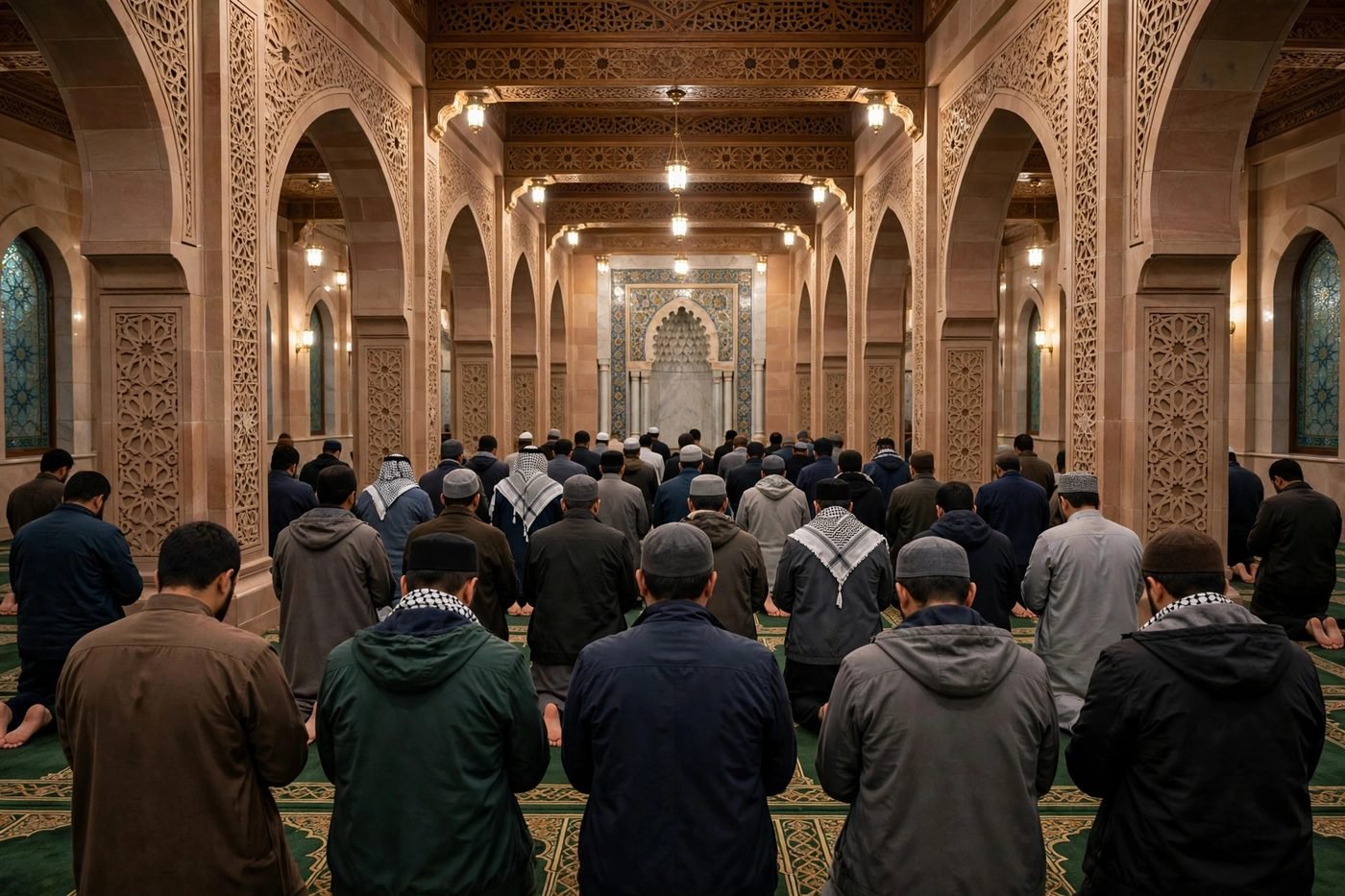
Quick answer: Taraweeh is the Sunnah mu'akkadah night prayer of Ramadan, prayed after Isha in units of two rakats with rests between them. Muslims pray eight or twenty rakats; both practices have evidence and are followed by major schools, so neither side should be declared wrong. Witr is prayed at the end.
What is taraweeh and what is its status?
Taraweeh is the special night prayer prayed in Ramadan after Isha. Its name comes from the word for rest, because worshippers would rest after every four rakats during the long prayers. The Prophet Muhammad (peace be upon him) prayed it in congregation for some nights and then stayed home, explaining that he feared it would be made obligatory upon the community. Under the caliph Umar ibn al-Khattab, people were gathered behind one imam, and the practice has continued ever since.
Taraweeh is classified by scholars as Sunnah mu'akkadah — a strongly emphasised Sunnah — for both men and women. It is not fard, so missing it is not sinful like missing an obligation, but the Prophet (peace be upon him) said that whoever stands in prayer during Ramadan out of faith and hope of reward will have their previous sins forgiven, which is why Muslims guard these prayers through the month.
Eight or twenty rakats? Both positions fairly
The number of rakats is the most discussed question about taraweeh, and it deserves a fair presentation. Twenty rakats is the established practice in the two Holy Mosques of Makkah and Madinah and the position of the majority of the classical schools — Hanafi, Shafi'i and Hanbali — based on the practice of the companions under Umar and continuous tradition after them. Those who pray twenty stand on solid ground.
Eight rakats plus three witr is based on the hadith of Aisha (may Allah be pleased with her) that the Prophet (peace be upon him) never prayed more than eleven rakats in Ramadan or outside it, describing his night prayer. Many scholars and communities follow eight as the Prophet's own personal practice, often praying them longer and with more recitation. Those who pray eight also stand on solid ground.
The mature conclusion of many scholars is that taraweeh, being a voluntary night prayer, has breadth in its number: both are transmitted, length and devotion matter more than the count, and declaring one side wrong harms the unity Ramadan is meant to build. Pray the number your mosque and school follow, with presence of heart.
How to pray taraweeh, step by step
Taraweeh is prayed in units of two rakats, like two-rakat prayers, with a short rest after every four rakats — hence the name. After Isha (and its Sunnah prayers, per local practice), stand for taraweeh with the intention of the night prayer of Ramadan. In congregation, follow the imam's recitation quietly; at home, recite whatever you know of the Quran, even short surahs repeated across rakats if that is what you have memorised.
There is no single required length of recitation. Mosques that aim to complete the Quran across Ramadan recite roughly a juz per night, while others recite shorter amounts; both are valid. Between units, people sit, make dhikr or dua, or simply rest. If your legs or health limit standing, sitting to pray a voluntary prayer is permitted, though standing is better where one is able.
- Pray Isha first; taraweeh comes after it and before witr
- Pray in pairs of two rakats, resting briefly after every four
- Finish with witr — one or three rakats — as the last prayer of the night
- If praying at home with family, one person may lead and others follow, just as in congregation
- Missed taraweeh is not made up the next day; simply continue the following night
Mosque or home? And women praying taraweeh
Praying taraweeh in congregation at the mosque carries the reward of praying behind the imam and the atmosphere of communal Ramadan nights, and it is the practice most associated with the month. Praying at home is also fully valid — the Prophet (peace be upon him) prayed most of his Ramadan night prayers at home — and suits parents of young children, those far from a mosque, shift workers and anyone whose devotion is stronger in quiet.
For women, praying at home is completely valid and rewarded, and attending the mosque for taraweeh is also established practice where facilities exist. The same applies to the full count: a woman praying eight or twenty rakats at home, on her own or with family, has prayed taraweeh in full. During menstruation, prayer is not performed, but dhikr, dua and listening to Quran remain open throughout those nights, including the nights of Laylat al-Qadr.
Witr and dua qunoot
Witr closes the night's prayers and is prayed after taraweeh, usually three rakats in congregation. In the Hanafi school witr is wajib (necessary) and prayed as three rakats with a sitting in the second, and dua qunoot is recited in the third rakat before ruku — this is the practice familiar across South Asian and Turkish mosques. In the Shafi'i and other schools witr is a strongly emphasised Sunnah, often prayed as two rakats plus one, and qunoot is recited in the final rakat after rising from ruku, especially in the second half of Ramadan in Shafi'i practice.
These are school differences in detail, not matters to dispute inside the prayer rows: when praying behind an imam, follow the imam's method. In the last ten nights many mosques add a longer qunoot in witr with extended dua for the congregation, which is among the most moving moments of Ramadan — attend if you can, and say ameen with presence.
Following the imam till the end, and the khatm
The Prophet (peace be upon him) said that whoever stands with the imam until he finishes, it is recorded for him as standing the whole night in prayer. This is a powerful encouragement to stay for the complete taraweeh and witr with your congregation rather than leaving partway, whenever you reasonably can — the reward of an entire night for the portion you actually prayed.
Many mosques complete the entire Quran in taraweeh across the month, called a khatm, often finishing on the 27th night or the final nights, followed by a communal dua. The khatm is a beloved custom, not a condition for taraweeh's validity: a mosque reciting less has still prayed taraweeh fully. Whether your Ramadan nights hold eight rakats at home or twenty with a khatm at the mosque, guard them — they are the heartbeat of the month.
Frequently asked questions
Is taraweeh obligatory? What if I miss a night?
Taraweeh is Sunnah mu'akkadah, a strongly emphasised Sunnah, not an obligation — so missing a night is not a sin and there is no makeup for it. Simply resume the next night. That said, its promised reward — forgiveness for the one who stands in Ramadan's nights with faith — makes it worth guarding as consistently as you can.
Should I pray 8 or 20 rakats of taraweeh?
Both are established: twenty is the position of the majority of classical schools and the practice of the Haramain, while eight plus witr follows Aisha's description of the Prophet's own night prayer. Follow your mosque and the school you trust, pray with devotion, and do not treat the other side as wrong — scholars have held both for centuries.
Can I pray taraweeh at home instead of the mosque?
Yes, completely. Taraweeh at home — alone or led with family — is valid and rewarded, and the Prophet (peace be upon him) prayed most Ramadan night prayers at home. The mosque adds congregation and the reward of staying with the imam until he finishes, but home prayer is the better choice whenever it protects your consistency or your family duties.
What if I join taraweeh late or need to leave early?
Join whenever you arrive, following the imam from that point; you can make up missed units before witr if you wish, though it is not required for a voluntary prayer. If you must leave early, you lose only the extra reward mentioned for staying until the imam finishes — your prayer is still valid and rewarded.
Can I hold the Quran or read from a phone during taraweeh?
Scholars differ on holding a mushaf during prayer: it is permitted in the Shafi'i and Hanbali schools for the one leading or praying voluntary prayers, while Hanafi scholars generally dislike holding and reading from it in prayer. Reading from a phone raises the same discussion. Follow your school's position, and if you are following an imam, simply listen — no reading is needed.